Human Rights

Trump DOJ Directive on Epstein Case Raises Legal Concerns

Download IPFS

President Donald Trump’s recent directive to Attorney General Pam Bondi to request the unsealing of grand jury testimony in the Jeffrey Epstein case has sparked significant debate, with legal experts warning of potential ethical and legal challenges. The move, announced late last week, comes amid heightened public interest in Epstein’s criminal activities and his 2019 death, which the New York City Medical Examiner ruled a suicide by hanging. However, the push to release sensitive material raises questions about judicial precedent and the sanctity of grand jury secrecy.

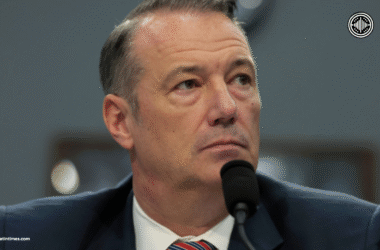
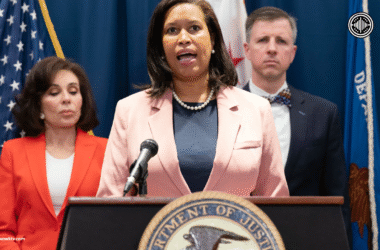
On Thursday evening, Trump issued a directive ordering the Justice Department to request the release of “any pertinent Grand Jury testimony” in the Epstein case, subject to court approval. The Justice Department promptly filed a motion in federal court in Manhattan on Friday, seeking to unseal grand jury transcripts and lift any existing protective orders The filing, signed by Deputy Attorney General Todd Blanche, a former Trump attorney, also stated that the DOJ is reviewing whether to file a similar motion in Florida, where Epstein faced earlier investigations.

The directive follows reports by The Wall Street Journal of a 2003 letter allegedly sent by Trump to Epstein, which the President has denied authoring. Trump responded by filing a lawsuit against the newspaper’s publisher, its reporters, and News Corp founder Rupert Murdoch. A Dow Jones spokesperson defended the outlet’s reporting, stating, “We have full confidence in the rigor and accuracy of our reporting, and will vigorously defend against any lawsuit.”

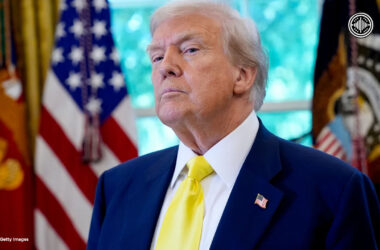
In a post on Truth Social, Trump wrote, “Based on the ridiculous amount of publicity given to Jeffrey Epstein, I have asked Attorney General Pam Bondi to produce any pertinent Grand Jury testimony, subject to Court approval. This SCAM, perpetuated by the Democrats, should end right now!” Bondi quickly affirmed the DOJ’s intent to act, posting on X, “We are ready to move the court tomorrow to unseal the grand jury transcripts.”

Legal experts, however, have raised concerns about the implications of such a move.. Grand jury testimony is protected by strict secrecy laws, with limited exceptions for disclosure, such as matters involving national security or foreign intelligence, though it is unclear whether those exceptions apply in this case. The 2nd U.S. Circuit Court of Appeals, which oversees New York’s Southern District, has previously ruled that judges may release grand jury materials in “special or exceptional circumstances,” citing factors like historical interest or the passage of time. Yet, with Ghislaine Maxwell, Epstein’s former associate, currently appealing her 2021 sex trafficking conviction to the Supreme Court, the case remains active, complicating any disclosure.

The DOJ’s filing argues that the “longstanding and legitimate” public interest in Epstein’s case justifies unsealing the transcripts, with appropriate redactions to protect victims and personal information. However, former federal prosecutor Chuck Rosenberg, speaking to NBC News, cautioned that releasing such material could set a dangerous precedent. “Rules aside, it is fundamentally unfair to dump subject names in the public domain,” Rosenberg said. “If they have done something wrong, they ought to be charged in a forum where they can contest the charges. Otherwise, they should say nothing.”

Public speculation has long centred on Epstein’s so-called “client list,” fuelled by conspiracy theories.. A recent Justice Department and FBI memo clarified that no “client list” exists, reaffirming that Epstein’s death was ruled a suicide and that no additional parties are currently facing federal charges in connection with his case. Legal analyst Kristy Greenberg, a former federal prosecutor, described Trump’s directive as a “red herring” in a post on X, noting that grand jury testimony is unlikely to include critical investigative materials like witness interview notes or financial records, which would reside in broader case files.

Epstein’s earlier Florida investigation in the mid-2000s, which resulted in a controversial plea deal, has also drawn scrutiny. Federal prosecutors now estimate he harmed over 1,000 victims, far exceeding the single-victim charge he faced in Florida. The current DOJ motion seeks to focus on testimony related to Epstein and Maxwell, though experts note that grand jury records typically centre on evidence against those being indicted, offering little insight into peripheral figures.

Former federal prosecutor Chuck Rosenberg further warned against releasing unredacted investigative files, stating, “In every case, investigative files contain lots of information—some vetted, some unvetted, some accurate, some inaccurate. Lots of people tell FBI agents lots of things. That doesn’t make that information true.”

As the Manhattan court considers the DOJ’s motion, any hearings are likely to occur under seal, limiting public access to the proceedings. Whether the court deems this case an “exceptional circumstance” remains to be seen, but the outcome could reshape the boundaries of grand jury secrecy and public transparency in high-profile cases.

Leave a Comment

Your email address will not be published. Required fields are marked *

*

OPENVC Logo OpenVoiceCoin $0.00
OPENVC

Latest Market Prices

Bitcoin

Bitcoin

$69,572.78

BTC -0.22%

Ethereum

Ethereum

$2,103.14

ETH 2.92%

NEO

NEO

$2.83

NEO -2.81%

Waves

Waves

$0.51

WAVES -0.35%

Monero

Monero

$327.69

XMR -0.24%

Nano

Nano

$0.59

NANO 1.00%

ARK

ARK

$0.20

ARK 6.76%

Pirate Chain

Pirate Chain

$0.28

ARRR -4.36%

Dogecoin

Dogecoin

$0.10

DOGE 0.16%

Litecoin

Litecoin

$55.87

LTC 1.96%

Cardano

Cardano

$0.28

ADA 0.13%

Subscribe to Blog via Email

Enter your email address to subscribe to this blog and receive notifications of new posts by email.