Human Rights

RFK Jr.’s Plan to Overhaul Vaccine Injury Compensation Program

Download IPFS

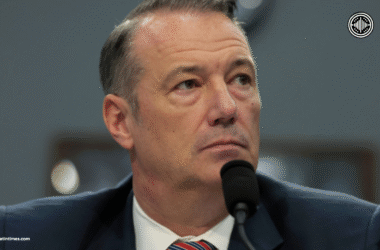
In a move that has sparked concern among public health experts, Robert F. Kennedy Jr., now leading the U.S. Department of Health and Human Services, is targeting the Vaccine Injury Compensation Program (VICP) for a significant overhaul. This critical system, established in 1988 under the National Childhood Vaccine Injury Act, compensates individuals who experience rare but serious side effects from covered vaccines, funded by a $0.75 excise tax per dose. It also shields manufacturers from most civil lawsuits by directing claims to a no-fault “vaccine court,” helping keep the vaccine supply stable. Kennedy’s proposed changes, however, risk destabilising this delicate balance, potentially threatening the availability of life-saving vaccines.

Kennedy, a longtime vaccine sceptic and founder of the non-profit Children’s Health Defence, has repeatedly claimed, without credible evidence, that vaccines cause autism and a range of chronic conditions. In a late-June interview with Tucker Carlson, he called the VICP “corrupt” and announced plans to expand eligibility and extend the statute of limitations, though details remain vague. Such changes could deplete the program’s trust fund, which has paid out about $4.6 billion since its inception. Data shows that for every million vaccine doses administered between 2006 and 2020, about 1.2 people received compensation.

The VICP was born out of necessity. In the 1980s, lawsuits alleging harm from vaccines, particularly whooping cough, diphtheria, and tetanus shots, drove manufacturers from the U.S. market. Shortages became so severe that theCentress for Disease Control and Prevention (CDC) advised doctors to ration booster shots. The programme, signed into law by President Ronald Reagan in 1986, created a no-fault system where claimants don’t need to prove manufacturer negligence, and a vaccine court handles cases without juries. This stabilised the industry, but Kennedy’s plans could unravel it.

Dr. Eddy Bresnitz, former New Jersey state epidemiologist and a retired Merck vaccine executive, expressed alarm. “If he aims to undermine the vaccine industry, this could achieve it,” he said in an interview. “Manufacturers prioritise public health, but they’re also businesses. Increased legal risks could prompt them to exit the market.” A spokesperson for PhRMA, the U.S. pharmaceutical trade group, warned that altering the VICP “could jeopardise access to safe, FDA-approved vaccines.”

Kennedy’s tenure has already disrupted immunisation efforts. He withdrew U.S. funding for global vaccination programs for impoverished children, dismissed the federal advisory panel on vaccine recommendations, and appointed a new group to scrutinise the childhood immunisation schedule. Measles, declared eliminated in the U.S. in 2000, resurged in 2025 with the highest case count in more than three decades, including at least three deaths. When pressed by a U.S. senator on recommending measles vaccines, Kennedy sidestepped, saying, “If I told you to swim in a lake with alligators, wouldn’t you want to know they’re there?”

The American Academy of Paediatrics and other medical groups have sued Kennedy, accusing him of dismantling a science-based vaccine framework that the CDC credits with preventing 1.1. The system is fragile: only a few companies produce childhood vaccines in the U.S., with just one making the chickenpox shot and two or three handling diseases like polio and measles. If manufacturers exit, as they did in the 1980s, shortages could cripple public health.

Kennedy’s proposed changes include extending the VICP’s three-year statute of limitation, which would need congressional approval, and potentially adding conditions like autism to the injury table, despite a lack of scientific evidence. The vaccine court, after reviewing thousands of autism claims in the early 2000s, found no link to an outcome backed by multiple large-scale studies. Adding conditions like diabetes or ADHD, as Kennedy suggested, could bankrupt the $4.6 billion trust fund because of how common these disorders are.

Dr. Paul Offit, a vaccine expert at Children’s Hospital of Philadelphia, warned, “Expanding the injury table with unproven claims could end vaccine production in the U.S.” Dorit Reiss, a law professor at UC Law San Francisco, noted that Congress might need to intervene, either by raising the vaccine tax or scrapping the programe, returning manufacturers to the litigious environment of the 1980s.

Kennedy’s ties to vaccine litigation add complexity. He referred plaintiffs to the law firm Wisner Baum in lawsuits against Merck over its HPV vaccine, initially disclosing a referral fee of about $856,559, which he later said would go to his son Conor. Conor clarified he does not work on these cases or receive funds from them.

The VICP’s problems aren’t new. Understaffing and a cap on special masters have slowed down cases, and a surge in adult claims since 2005 has strained the system. Kennedy appointed Andrew Downing, a lawyer with experience in vaccine injury cases, as a senior counsel at H, showing he plans to take a direct role in reform efforts. However, without clear evidence or a robust plan, his changes could jeopardise decades of progress in vaccine accessibility and public health.

Leave a Comment

Your email address will not be published. Required fields are marked *

*

OPENVC Logo OpenVoiceCoin $0.00
OPENVC

Latest Market Prices

Bitcoin

Bitcoin

$71,833.14

BTC 2.75%

Ethereum

Ethereum

$2,101.74

ETH 2.62%

NEO

NEO

$2.63

NEO 2.77%

Waves

Waves

$0.46

WAVES 0.80%

Monero

Monero

$356.96

XMR 0.89%

Nano

Nano

$0.52

NANO -0.76%

ARK

ARK

$0.18

ARK 2.76%

Pirate Chain

Pirate Chain

$0.25

ARRR 10.21%

Dogecoin

Dogecoin

$0.10

DOGE 4.94%

Litecoin

Litecoin

$55.21

LTC 1.51%

Cardano

Cardano

$0.27

ADA 4.54%

Subscribe to Blog via Email

Enter your email address to subscribe to this blog and receive notifications of new posts by email.