Finance

Asian Stocks Fall as Trump’s Tariff Warning Weighs on Markets

DOWNLOAD IPFS

Asian markets retreated on Tuesday as growing concerns over renewed tariffs from the United States unsettled investors. Despite some resilience in economic data from China, the broader regional sentiment remained cautious amid mounting geopolitical and trade pressures.

Japan’s Nikkei 225 fell by approximately 0.6 percent, South Korea’s KOSPI declined 0.4 percent, and Australia’s S&P/ASX 200 dropped 0.7 percent. China’s Shanghai Composite was down 0.9 percent, while the Hang Seng Index in Hong Kong edged 0.2 percent lower. Investors appeared jittery in response to mixed economic signals and the looming threat of increased trade barriers.

China’s gross domestic product (GDP) expanded by 5.2 percent year-over-year in the second quarter, slightly above expectations. However, the figure marked a slowdown from the 5.4 percent posted in the first quarter. Industrial production grew by 6.8 percent in June, but domestic demand remained weak, held back by sluggish consumer spending and persistent troubles in the property sector.

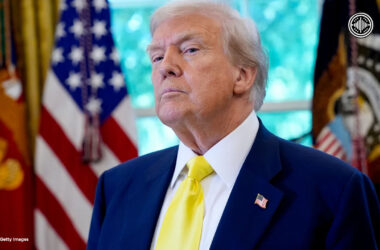
Investor attention has shifted sharply back to the United States, where former President Donald Trump has proposed new tariffs on Chinese imports, potentially taking effect by August 1. While not yet finalized, the announcement has already caused a reaction in Asian markets, with concerns over how the move might disrupt trade flows and supply chains across the region.

Some market observers believe the tariff pressure is politically timed and unlikely to persist for long. Ed Yardeni, a veteran Wall Street strategist, noted that “the tariff situation isn’t likely to last many more months, as Trump can’t afford to risk a recession.” Such assessments suggest that while the rhetoric is strong, the underlying economic and political incentives may steer the situation toward compromise.

From a market-oriented standpoint, Asian governments would be wise to focus on economic liberalization rather than interventionist measures. Cutting bureaucratic red tape, enhancing legal protections for private investors, and promoting entrepreneurship can help build long-term resilience, especially in the face of external shocks like tariffs.

In conclusion, while China’s economic indicators remain mixed, the overarching concern for Asian investors remains the risk of renewed U.S. tariffs. Sound economic governance, fiscal restraint, and open-market reforms, paired with diplomatic caution, will be key to maintaining regional stability and investor   confidence during uncertain times. 

Leave a Comment

Your email address will not be published. Required fields are marked *

*

OPENVC Logo OpenVoiceCoin $0.00
OPENVC

Latest Market Prices

Bitcoin

Bitcoin

$82,577.15

BTC -0.06%

Ethereum

Ethereum

$2,622.35

ETH -3.81%

NEO

NEO

$3.20

NEO -2.41%

Waves

Waves

$0.59

WAVES -1.06%

Monero

Monero

$490.23

XMR 15.40%

Nano

Nano

$0.66

NANO 1.32%

ARK

ARK

$0.23

ARK 2.13%

Pirate Chain

Pirate Chain

$0.35

ARRR -12.03%

Dogecoin

Dogecoin

$0.11

DOGE -3.28%

Litecoin

Litecoin

$62.20

LTC -2.97%

Cardano

Cardano

$0.31

ADA -4.78%

Subscribe to Blog via Email

Enter your email address to subscribe to this blog and receive notifications of new posts by email.