Economics

Nvidia Set to Resume H20 AI Chip Sales to China After U.S. Export License Approval

DOWNLOAD IPFS

Nvidia is set to restart shipments of its H20 artificial intelligence (AI) chips to China, following confirmation that export licenses from the United States will be granted. The move marks a significant shift in U.S.-China tech dynamics and helps Nvidia recover from months of halted sales and mounting inventory losses.

The H20 chip, developed to comply with previous U.S. export restrictions, had been caught in a trade freeze earlier this year. The pause, implemented under directives from the Trump administration, led to a multibillion-dollar write-down in unsold inventory and put an estimated $15 billion to $16 billion in future revenue at risk. With China being a critical market for AI hardware, the sales suspension raised concerns over lost market share and competitive disadvantages for U.S. firms.

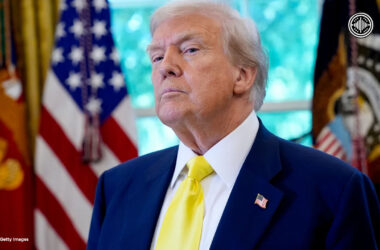
After a direct meeting between Nvidia Chief Executive Officer Jensen Huang and former President Donald Trump in Washington, the U.S. Commerce Department signaled that license approvals for the H20 chip would move forward. Shipments to Chinese customers are expected to resume shortly.

Huang, speaking from Beijing, emphasized that engagement with China is essential to maintaining leadership in AI innovation. He pointed out that roughly half of the world’s AI research talent is based in China. Alongside the license approval, Nvidia also introduced a new product, the RTX Pro graphics chip, designed specifically for the Chinese market and fully compliant with U.S. export regulations. The RTX Pro will support advanced applications in smart manufacturing and logistics, particularly through digital twin AI systems.

News of the resumed exports lifted market sentiment. Nvidia’s stock rose approximately 3 percent, and other semiconductor firms with business ties to China, including Advanced Micro Devices, Broadcom, and Taiwan Semiconductor Manufacturing Company, also saw gains.

From a market-oriented standpoint, the decision highlights the importance of stable, transparent export policies that support American competitiveness while safeguarding national interests. Strategic industries like semiconductors thrive when regulatory certainty aligns with innovation incentives.

Still, national security considerations remain a priority. Huang clarified that the H20 chip is intended for civilian use and that China already possesses substantial computing capacity. The continued dominance of Nvidia’s proprietary AI software stack also provides a layer of oversight, as it enables usage tracking and performance control.

In summary, the return of Nvidia’s H20 chip to the Chinese market reflects a pragmatic shift in U.S. policy, one that balances economic strength with strategic caution. For American tech leadership, this marks a necessary step toward regaining momentum in the global AI race.

Leave a Comment

Your email address will not be published. Required fields are marked *

*

OPENVC Logo OpenVoiceCoin $0.00
OPENVC

Latest Market Prices

Bitcoin

Bitcoin

$69,157.97

BTC 0.78%

Ethereum

Ethereum

$2,043.97

ETH 3.21%

NEO

NEO

$2.78

NEO -3.31%

Waves

Waves

$0.50

WAVES -0.87%

Monero

Monero

$329.23

XMR 3.37%

Nano

Nano

$0.58

NANO 2.34%

ARK

ARK

$0.19

ARK 5.12%

Pirate Chain

Pirate Chain

$0.28

ARRR -0.97%

Dogecoin

Dogecoin

$0.10

DOGE 0.12%

Litecoin

Litecoin

$54.18

LTC -0.33%

Cardano

Cardano

$0.27

ADA -0.54%

Subscribe to Blog via Email

Enter your email address to subscribe to this blog and receive notifications of new posts by email.