Breaking News

Trump’s New Tariffs Take Effect on Dozens of Nations Amid Push for Trade Fairness

Download IPFS

Sweeping tariff increases imposed by President Donald Trump officially took effect Thursday, targeting more than 60 countries with new import duties. The move is aimed at curbing trade practices the United States deems unfair, while incentivizing domestic investment. However, concerns remain among small businesses and economists over potential inflationary effects and higher consumer costs.

According to the executive order signed last week, the new “reciprocal” tariffs are being collected by U.S. Customs and Border Protection (CBP) as of 12:01 a.m. Eastern Daylight Time (EDT). The tariffs vary by country, ranging from 10 percent on goods from the United Kingdom to as high as 50 percent on Brazilian imports. The changes come after months of trade negotiations between the United States and its major partners.

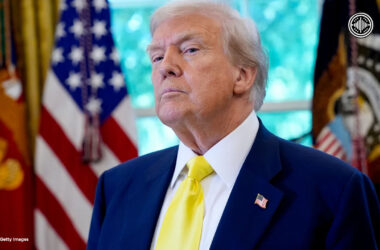
President Trump has strongly defended the policy shift, describing the measure as a way to bring “billions of dollars” into the U.S. economy. He reiterated his stance via Truth Social, warning that only “a radical left court” could threaten the country’s strength and economic momentum. Secretary of the Treasury Scott Bessent projected that the new tariffs could generate over $300 billion annually in revenue.

The new duties replace the prior 10 percent baseline import rate Trump had set after pausing earlier planned increases in April. Since then, the administration has adjusted the rates repeatedly, setting them at 50 percent for Brazil, 39 percent for Switzerland, 35 percent for Canada, and 25 percent for India. Trump has also warned that tariffs on Indian goods may rise to 50 percent later in the month unless India halts purchases of Russian oil.

While the administration maintains that the tariffs are designed to counteract unfair trade behavior, some U.S. businesses, particularly smaller ones, have voiced concerns. Industry groups argue that the cost increases may disproportionately hurt companies with limited supply chain flexibility. Economists have similarly raised red flags, noting that higher import costs could contribute to inflation and reduce consumer purchasing power.

Al Jazeera correspondent Alan Fisher reported from Washington, DC, that the U.S. coffee industry could be particularly affected, given its heavy reliance on Brazilian imports. Smaller retailers, not just major chains, source beans from Brazil, which has already seen price hikes due to climate-related shortages.

The U.S. maintains a trade surplus with Brazil, leading to speculation among some analysts that the tariffs could also carry a political dimension, possibly linked to Brazil’s ongoing legal proceedings against former President Jair Bolsonaro, a known ally of Trump.

Eight major U.S. trade partners, including the European Union, Japan, and South Korea, have reached agreements to cap their base tariff rates at 15 percent. The United Kingdom has settled on 10 percent, while nations such as Vietnam, Indonesia, Pakistan, and the Philippines accepted rates between 19 and 20 percent.

The executive order also contains provisions to penalize transshipment, the practice of rerouting goods through third countries to bypass U.S. tariffs. Items found to be part of such schemes could face an additional 40 percent duty. However, enforcement details remain limited at this stage.

John Diamond, an analyst with the Center for Tax and Budget Policy at Rice University’s Baker Institute, noted that the policy may lead to higher prices and reduced product availability. “You’re going to see that there’s winners and losers,” Diamond said in an interview with Al Jazeera. “And you’re going to see that there’s a lot of inefficiency with political kickbacks and political punishments for adversaries.”

Adding to the list of trade measures, President Trump announced a 100 percent tariff on foreign-manufactured semiconductors. However, companies with existing investments in the United States will be eligible for exemptions under the new policy.

As the tariff changes roll out, they underscore the administration’s strategy of leveraging trade policy as a tool to both reshape global supply chains and strengthen U.S. manufacturing, while navigating the risks of economic backlash.

Leave a Comment

Your email address will not be published. Required fields are marked *

*

OPENVC Logo OpenVoiceCoin $0.00
OPENVC

Latest Market Prices

Bitcoin

Bitcoin

$68,965.61

BTC -2.23%

Ethereum

Ethereum

$2,081.17

ETH 0.91%

NEO

NEO

$2.78

NEO -4.60%

Waves

Waves

$0.51

WAVES -1.11%

Monero

Monero

$330.17

XMR 2.66%

Nano

Nano

$0.59

NANO -1.13%

ARK

ARK

$0.19

ARK 3.22%

Pirate Chain

Pirate Chain

$0.28

ARRR -0.24%

Dogecoin

Dogecoin

$0.10

DOGE -0.49%

Litecoin

Litecoin

$55.13

LTC 0.24%

Cardano

Cardano

$0.27

ADA -1.65%

Subscribe to Blog via Email

Enter your email address to subscribe to this blog and receive notifications of new posts by email.