Breaking News

Trump’s Trade Strategy: How Economic Leverage Delivered Tangible Results

Download IPFS

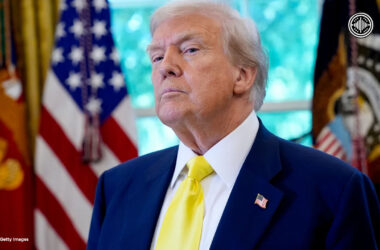
In a move that stirred global markets and redefined U.S. trade policy, former President Donald Trump used America’s economic clout to secure a series of trade concessions, culminating in what his advisers described as a successful recalibration of longstanding imbalances. Despite heavy criticism and market volatility, Trump’s strategy of leveraging tariffs paid off in reshaping bilateral trade relationships.

Over 120 days following Trump’s “Liberation Day” announcement in the White House Rose Garden, financial markets experienced frequent turbulence. Traders reacted sharply to waves of uncertainty, often responding to what some labeled “TACOs” trades based on the assumption that “Trump Always Chickens Out.” Nonetheless, Trump’s administration pushed forward, deploying the full weight of executive authority to implement tariffs aimed at pressuring America’s largest trading partners.

Although many mainstream economists and critics warned of potential fallout, including inflation and economic instability, the results defied predictions. Bilateral trade deals began materializing as the White House approached its self-imposed deadline of August 1 for enforcing “reciprocal” tariffs. The average tariff rate on imports into the United States climbed to its highest point in nearly a century, while federal tariff revenues surged.

Crucially, inflation fears failed to materialize, and the broader U.S. economy maintained steady momentum. Financial markets, after an initial period of volatility, stabilized. Stock indices hovered near record highs, underscoring investor confidence in the administration’s economic direction.

Though public polling consistently showed tariffs as unpopular, Trump and his economic team remained committed. A senior White House official, in an interview, remarked bluntly, “Maybe the losers and haters were really just losers and haters.” That sentiment underscored a belief that, despite political and institutional pushback, the strategy was delivering measurable outcomes.

At the heart of the administration’s approach was a focus on leveraging the principle that the United States, as the world’s largest economy, could afford to take bold action to reset what it saw as unfair trade dynamics. The method ran contrary to decades of conventional post-World War II economic policy, challenging both national security arguments and free-trade orthodoxy long held within the Republican Party.

Even as Trump’s legal authority to maintain some tariffs continues to face judicial scrutiny, his administration’s trade efforts reflected a calculated willingness to disrupt the status quo. For Trump and his advisers, the gamble was clear: use America’s unmatched market power to demand better terms and wait for others to blink.

In the end, according to Trump’s team, the strategy worked.

Leave a Comment

Your email address will not be published. Required fields are marked *

*

OPENVC Logo OpenVoiceCoin $0.00
OPENVC

Latest Market Prices

Bitcoin

Bitcoin

$68,470.17

BTC -0.99%

Ethereum

Ethereum

$2,054.66

ETH -2.55%

NEO

NEO

$2.60

NEO -1.49%

Waves

Waves

$0.44

WAVES -1.85%

Monero

Monero

$359.64

XMR 4.84%

Nano

Nano

$0.46

NANO -1.23%

ARK

ARK

$0.17

ARK -2.43%

Pirate Chain

Pirate Chain

$0.22

ARRR -3.74%

Dogecoin

Dogecoin

$0.09

DOGE -1.21%

Litecoin

Litecoin

$53.87

LTC -1.38%

Cardano

Cardano

$0.25

ADA -2.73%

Subscribe to Blog via Email

Enter your email address to subscribe to this blog and receive notifications of new posts by email.