Breaking News

Trump Sets 90-Day Negotiating Window with Mexico as Tariff Pressures Remain

Download IPFS

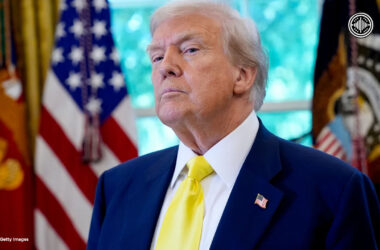
Former President Donald Trump announced a 90-day negotiation period with Mexico following a phone call with Mexican President Claudia Sheinbaum, affirming that the United States will maintain a 25% tariff on imported Mexican goods during this period. The announcement, made Thursday via Trump’s Truth Social account, signals a continued hardline trade stance that he has linked to efforts to combat fentanyl trafficking and reduce the longstanding trade deficit.

Describing the conversation as “very successful,” Trump noted that the two leaders are making progress in building mutual understanding. Despite the diplomatic tone, Trump made clear that the tariff structure would remain in place while talks proceed. Automobiles from Mexico will continue to face a 25% tariff, while tariffs on copper, aluminum, and steel will stand at 50%, further underscoring the administration’s intent to pressure Mexico on key trade and security issues.

Trump also claimed that Mexico had agreed to eliminate certain “Non-Tariff Trade Barriers,” though he did not provide details on what specific measures would be lifted. These types of trade restrictions, which can include import quotas or licensing requirements, have long been criticized by U.S. manufacturers as obstacles to fair trade.

While some goods remain exempt from the new tariffs under the United States–Mexico–Canada Agreement (USMCA), a trade pact Trump secured during his first term, the former president appeared critical of the deal’s current structure. The agreement is scheduled for review and possible renegotiation in the coming year. Earlier this year, Trump had already reintroduced tariffs on both Mexican and Canadian imports, signaling a shift away from the more cooperative trade posture that followed USMCA’s enactment.

According to data from the U.S. Census Bureau, the trade imbalance between the U.S. and Mexico reached $171.5 billion last year. That figure has nearly tripled since 2016, when the trade deficit stood at $63.3 billion the year before Trump took office. The widening gap has remained a focus for Trump, who has consistently advocated for policies aimed at reducing U.S. dependence on foreign goods and reviving domestic manufacturing.

The former president has also tied the tariff measures to national security concerns, particularly the trafficking of fentanyl, a powerful synthetic opioid largely produced using chemicals imported through Mexico. The White House under Trump has repeatedly emphasized that tougher trade enforcement could play a role in limiting the flow of illicit drugs into the U.S.

As negotiations begin, the pressure is now on Mexico to address both economic and security concerns. Trump’s approach reflects his broader strategy of leveraging economic power to influence foreign policy outcomes, especially with key trading partners in the region.

Leave a Comment

Your email address will not be published. Required fields are marked *

*

OPENVC Logo OpenVoiceCoin $0.00
OPENVC

Latest Market Prices

Bitcoin

Bitcoin

$67,917.73

BTC -1.79%

Ethereum

Ethereum

$2,036.80

ETH -3.39%

NEO

NEO

$2.59

NEO -1.67%

Waves

Waves

$0.43

WAVES -2.44%

Monero

Monero

$356.51

XMR 3.93%

Nano

Nano

$0.45

NANO -2.63%

ARK

ARK

$0.16

ARK -3.05%

Pirate Chain

Pirate Chain

$0.22

ARRR -3.63%

Dogecoin

Dogecoin

$0.09

DOGE -1.68%

Litecoin

Litecoin

$53.58

LTC -1.91%

Cardano

Cardano

$0.25

ADA -3.13%

Subscribe to Blog via Email

Enter your email address to subscribe to this blog and receive notifications of new posts by email.