Politics & Government

United States Secures EU Energy Deal to Displace Russian Supply

DOWNLOAD IPFS

The United States finalized an agreement on July 31, 2025, under which the European Union pledges to purchase up to $750 billion in U.S. energy over the next three years and invest $600 billion in the U.S. economy. The deal includes a 15 percent tariff on most EU exports to the U.S., aims to reduce Europe’s reliance on Russian oil and gas, and reinforces transatlantic alignment.

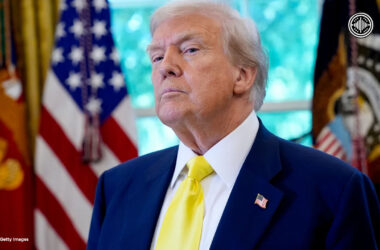
President Donald Trump leads the negotiations, pressing the EU to shift from Russian energy toward U.S. oil, liquefied natural gas (LNG), and nuclear fuel. European Commission President Ursula von der Leyen welcomes the agreement as a strategic pivot, even as critics question its cost and feasibility. Analysts warn that the energy purchase target would require tripling current U.S. energy exports to Europe, a task complicated by limited export capacity and long-term contracts.

The arrangement arrives amid Europe’s accelerated effort to eliminate remaining Russian fuel imports under the REPowerEU initiative. The bloc has already reduced its reliance on Russian gas from nearly 45 percent to around 15 percent over the past two years. Nearly half of the EU’s LNG supply already comes from the U.S., suggesting the deal may reinforce existing trade patterns rather than introduce significant changes.

Energy markets respond positively, with crude oil prices rising over two percent following the announcement. However, experts caution that actual deliveries may fall well short of pledge levels. U.S. free market dynamics and infrastructure constraints limit how quickly exports can expand. The EU lacks a unified gas procurement system, making centralized fulfillment of the terms virtually impossible.

European leaders remain divided. Some view the deal as necessary to secure American support amid rising Russian aggression. Others label it a concession, fearing the EU ceded leverage and economic autonomy in exchange for security assurances. National governments in Germany, France and others continue to debate whether the agreement sacrifices too much for strategic stability.

Lobbyists and industry officials caution that reliability concerns, climate goals, and rising gas prices could prompt Europe to reexamine the deal’s long-term viability. Businesses in major exporting regions warn of potential inflationary effects and competitive strain from higher fuel costs. At the same time, U.S. exporters gain a diplomatic and economic boost that strengthens the American energy sector.

The pact marks a defining moment in U.S.-EU relations. It illustrates how energy trade now serves as a tool of geopolitics. With uncertainty still surrounding implementation, both capitals face the challenge of translating words into supply and aligning economic interests with evolving security imperatives.

Leave a Comment

Your email address will not be published. Required fields are marked *

*

OPENVC Logo OpenVoiceCoin $0.00
OPENVC

Latest Market Prices

Bitcoin

Bitcoin

$67,722.60

BTC 1.75%

Ethereum

Ethereum

$2,012.00

ETH 4.20%

NEO

NEO

$2.76

NEO -1.59%

Waves

Waves

$0.49

WAVES -0.81%

Monero

Monero

$324.84

XMR 5.10%

Nano

Nano

$0.57

NANO -0.04%

ARK

ARK

$0.21

ARK 19.56%

Pirate Chain

Pirate Chain

$0.27

ARRR 1.09%

Dogecoin

Dogecoin

$0.10

DOGE 1.81%

Litecoin

Litecoin

$53.11

LTC 1.25%

Cardano

Cardano

$0.27

ADA 2.03%

Subscribe to Blog via Email

Enter your email address to subscribe to this blog and receive notifications of new posts by email.