Defence & Security

Appeals Court Blocks Trump’s Order on Birthright Citizenship, Declares It Unconstitutional

Download IPFS

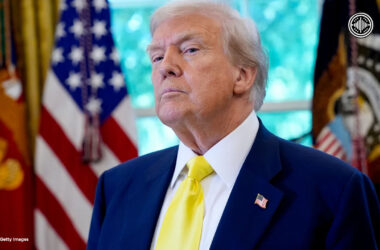
A federal appeals court has ruled that President Donald Trump’s executive order seeking to restrict birthright citizenship is unconstitutional.
The decision, handed down Wednesday by the U.S. Court of Appeals for the Ninth Circuit, marks the most significant judicial response yet to the administration’s efforts to reinterpret a longstanding provision of the Constitution.

The executive order, issued on the first day of President Trump’s second term, instructed federal agencies to deny automatic citizenship to individuals born in the United States if neither parent was a U.S. citizen or lawful permanent resident, commonly known as a green card holder.

It applied to children of undocumented immigrants and temporary visa holders, sparking immediate legal challenges from several Democrat-led states. The order has been on hold since February following a federal injunction in Washington state.

At the heart of the legal battle is the Fourteenth Amendment of the U.S. Constitution, ratified in 1868, which grants citizenship to “all persons born or naturalized in the United States, and subject to the jurisdiction thereof.” Trump’s administration argued that individuals born to non-citizen parents are not fully “subject to the jurisdiction” of the United States, citing lack of full legal allegiance. This interpretation, they claimed, excludes such children from automatic citizenship.

But the Ninth Circuit disagreed. The panel, composed of two judges appointed by Democratic presidents, found that the administration’s reading of the Constitution was historically unsupported and legally unconvincing. “The Defendants’ proposed interpretation of the Citizenship Clause relies on a network of inferences that are unmoored from the accepted legal principles of 1868,” the ruling stated.

Judge Ronald Gould, appointed by President Clinton, wrote the majority opinion, joined by Judge Michael Daly Hawkins, a President Obama appointee. The ruling emphasized that those born on U.S. soil, regardless of their parents’ immigration status, are “subject to the laws and authority of the United States,” satisfying the requirement for citizenship under the Fourteenth Amendment.

Judge Patrick Bumatay, appointed by President Trump, partially dissented. He argued that the states lacked standing to sue and said the court should not have addressed the constitutional question at this stage of litigation.

White House spokeswoman Abigail Jackson pushed back on the ruling, saying, “The Ninth Circuit misinterpreted the purpose and the text of the 14th Amendment. We look forward to being vindicated on appeal.” Trump allies also criticized the panel’s composition and emphasized the administration’s intention to take the fight to the Supreme Court if necessary.

While the Supreme Court (SCOTUS) has not directly addressed the merits of this specific order, it recently ruled on a related procedural matter. In a 6–3 decision, SCOTUS restricted the use of nationwide injunctions by lower courts, siding partially with the administration. However, a class action lawsuit in New Hampshire quickly reinstated a nationwide pause on the executive order, effectively maintaining the status quo.

The Ninth Circuit’s ruling affirmed that the states involved had the legal right to sue, based on potential financial impacts from federal policies redefining who qualifies for citizenship. The appellate court also agreed with the lower court’s finding that the plaintiffs are likely to succeed in demonstrating that Trump’s executive order violates the Constitution.

Critics of the order argue that attempting to change constitutional interpretation through executive action sets a dangerous precedent. Legal scholars on both sides of the aisle have long debated the scope of the Citizenship Clause, but most agree that altering its meaning would require a constitutional amendment or legislation passed by Congress, not a unilateral order from the president.

Still, the Trump administration maintains its position that birthright citizenship has been misunderstood and exploited, and that it remains a legitimate target for reform. With the appeals court ruling now in place, the issue is likely headed for a more definitive judgment at the nation’s highest court.

As the legal battle continues, the broader question of how America defines citizenship and who has the authority to make that determination remains unresolved. What is clear, however, is that the judiciary will play a decisive role in shaping the outcome.

Leave a Comment

Your email address will not be published. Required fields are marked *

*

OPENVC Logo OpenVoiceCoin $0.00
OPENVC

Latest Market Prices

Bitcoin

Bitcoin

$68,965.61

BTC -2.23%

Ethereum

Ethereum

$2,081.17

ETH 0.91%

NEO

NEO

$2.78

NEO -4.60%

Waves

Waves

$0.51

WAVES -1.11%

Monero

Monero

$330.17

XMR 2.66%

Nano

Nano

$0.59

NANO -1.13%

ARK

ARK

$0.19

ARK 3.22%

Pirate Chain

Pirate Chain

$0.28

ARRR -0.24%

Dogecoin

Dogecoin

$0.10

DOGE -0.49%

Litecoin

Litecoin

$55.13

LTC 0.24%

Cardano

Cardano

$0.27

ADA -1.65%

Subscribe to Blog via Email

Enter your email address to subscribe to this blog and receive notifications of new posts by email.